 By Apollo Kokkinopoulos
Restaurants are among the most energy-intensive businesses in the commercial sector. Between commercial kitchen equipment running at full capacity during service, walk-in coolers and freezers operating around the clock, HVAC systems battling Texas heat, and hood ventilation fans that never stop, electricity is often the second-largest operating expense for Texas restaurants — right behind labor. Our restaurants and food industry page covers how we help operators across the state.
The good news is that operating in ERCOT's deregulated electricity market means you have options. Unlike states where a single utility dictates your rate, Texas restaurant operators can choose their commercial electricity supplier, negotiate their contract terms, and implement operational strategies that directly reduce what they pay. This guide covers the practical, high-impact actions you can take to bring those electricity costs down.
Why Restaurant Electricity Bills Are So High
Before you can fix the problem, it helps to understand why restaurants use so much electricity compared to other commercial businesses of similar size. The answer comes down to two factors: total consumption and peak demand.
On the consumption side, restaurants operate energy-hungry equipment for extended hours:
- Walk-in coolers and freezers run 24 hours a day, 7 days a week. These are the baseline of your electricity usage, drawing power even when the restaurant is closed.
- Commercial ovens, fryers, and grills consume massive amounts of electricity during prep and service. A single commercial convection oven can draw 10-15 kW.
- HVAC systems work overtime in Texas, especially from May through September. The kitchen generates significant heat, so your cooling system is not just fighting outdoor temperatures — it is fighting the heat your own equipment produces.
- Hood ventilation systems are required by code to run whenever cooking equipment is in operation, and they pull conditioned air out of the building, forcing the HVAC to work harder.
- Lighting, POS systems, dishwashers, and ice machines round out a substantial base load that runs through every shift.
All of this equipment running simultaneously is what drives the second factor — peak demand — which is where the real cost pain point lies for most restaurants.

Understand Your Demand Charges
If you are a restaurant owner or manager who looks at your electricity bill and only focuses on the total kWh consumed, you are missing the biggest opportunity for savings. For commercial accounts, demand charges can represent 30-40% of your total electricity bill, and restaurants are particularly vulnerable to high demand charges because of how kitchen operations work.
Here is how demand charges are calculated: your meter measures electricity usage in 15-minute intervals throughout the billing period. The single highest 15-minute interval sets your demand charge for the entire month. That one peak — even if it only happens once — determines what you pay in demand charges for the next 30 days.
For a typical restaurant, here is what creates that peak: the morning crew arrives at 9:00 or 10:00 AM and turns on everything at once. Ovens get preheated, fryers come up to temperature, the walk-in compressors cycle on, the HVAC kicks into high gear, the hood vents start running, and the lights come on — all within a 15-minute window. That simultaneous startup creates a demand spike that is dramatically higher than the restaurant's average power draw throughout the day.
Simply staggering your equipment startup by 15-20 minutes — bringing ovens online first, then fryers, then other equipment — can reduce your peak demand by 15-25%. That translates directly into lower demand charges every month.
This is the single most cost-effective operational change most restaurants can make, and it costs nothing to implement.
Choose the Right Rate Structure
Restaurants have a usage pattern that makes rate structure selection particularly important. Your highest electricity consumption occurs during summer months (HVAC fighting Texas heat plus kitchen load) and during peak daytime/evening hours (when wholesale electricity prices are highest). This means that a variable rate is especially risky for restaurants — you are buying the most power at the exact times when market prices are highest.
For most restaurants, a fixed rate or hybrid rate is the better choice:
- Fixed rate gives you complete budget predictability. You know exactly what your energy charge will be per kWh every month, regardless of what the wholesale market does. This is valuable for restaurants operating on thin margins where an unexpected spike in utility costs can wipe out profitability for the month.
- Hybrid rate (part fixed, part indexed) offers a middle ground. The fixed portion protects you from extreme summer pricing while the indexed portion lets you benefit from lower market prices during mild months. A 70/30 or 60/40 fixed-to-variable split is common for restaurant accounts.
Whichever structure you choose, the key is to make an active decision rather than letting your contract auto-renew into whatever the REP defaults you to. More on that below.
Schedule Equipment and Operations Strategically
Beyond staggering your morning startup, there are several operational adjustments that can reduce your electricity consumption and demand without impacting food quality or customer experience:
- Pre-cool the dining area. Run your HVAC aggressively during the early morning hours before the kitchen fires up. Getting the space to a lower temperature before the kitchen starts generating heat means the HVAC does not have to work as hard during peak hours. Some operators drop the thermostat 3-4 degrees below their target before the lunch rush, then let it coast.
- Stagger oven and fryer preheating. Most restaurants preheat all cooking equipment at once as part of the opening routine. Instead, bring equipment online in the order it is needed. If ovens need 20 minutes to preheat and fryers need 10, start the ovens first and the fryers 15 minutes later.
- Use programmable thermostats. Set the HVAC to reduce output during closed hours and ramp up gradually before opening. There is no reason to cool an empty dining room to 72 degrees at 3:00 AM.
- Run dishwashers strategically. If possible, run the dishwasher during off-peak periods rather than during the peak of lunch or dinner service. This reduces the chance of setting a new demand peak during already high-usage periods.
- Convert to LED lighting. If you have not already made this switch, LED lighting uses 75% less energy than traditional incandescent or halogen bulbs and produces significantly less heat — which also reduces HVAC load. The payback period for a full restaurant LED conversion is typically under 12 months.
- Maintain equipment regularly. Dirty condenser coils on refrigeration units, clogged HVAC filters, worn gaskets on walk-in doors — all of these force equipment to work harder and use more electricity. A routine maintenance schedule pays for itself in energy savings.

Audit Your Bills for Errors
Billing errors are more common than most restaurant owners realize, and they tend to go unnoticed because few people scrutinize their electricity bills line by line. The types of errors we frequently uncover in restaurant account audits include:
- Incorrect rate class. Some restaurants are billed under a small commercial or even residential rate schedule when they should be on a different commercial class. The wrong rate class means the wrong per-kWh rate, the wrong demand charge structure, and potentially years of overpayment.
- Incorrect meter multiplier. Commercial meters often use current transformers (CTs) that multiply the meter reading by a factor to calculate actual usage. If the multiplier is set incorrectly — even slightly — every bill is wrong.
- Estimated reads that are never corrected. If the TDU cannot read your meter (obstructed access, communication failure), they estimate your usage. These estimates should be corrected when an actual read is obtained, but sometimes they are not.
- Charges for disconnected services. If you consolidated meters, closed a location, or had equipment removed, residual charges can persist on your account.
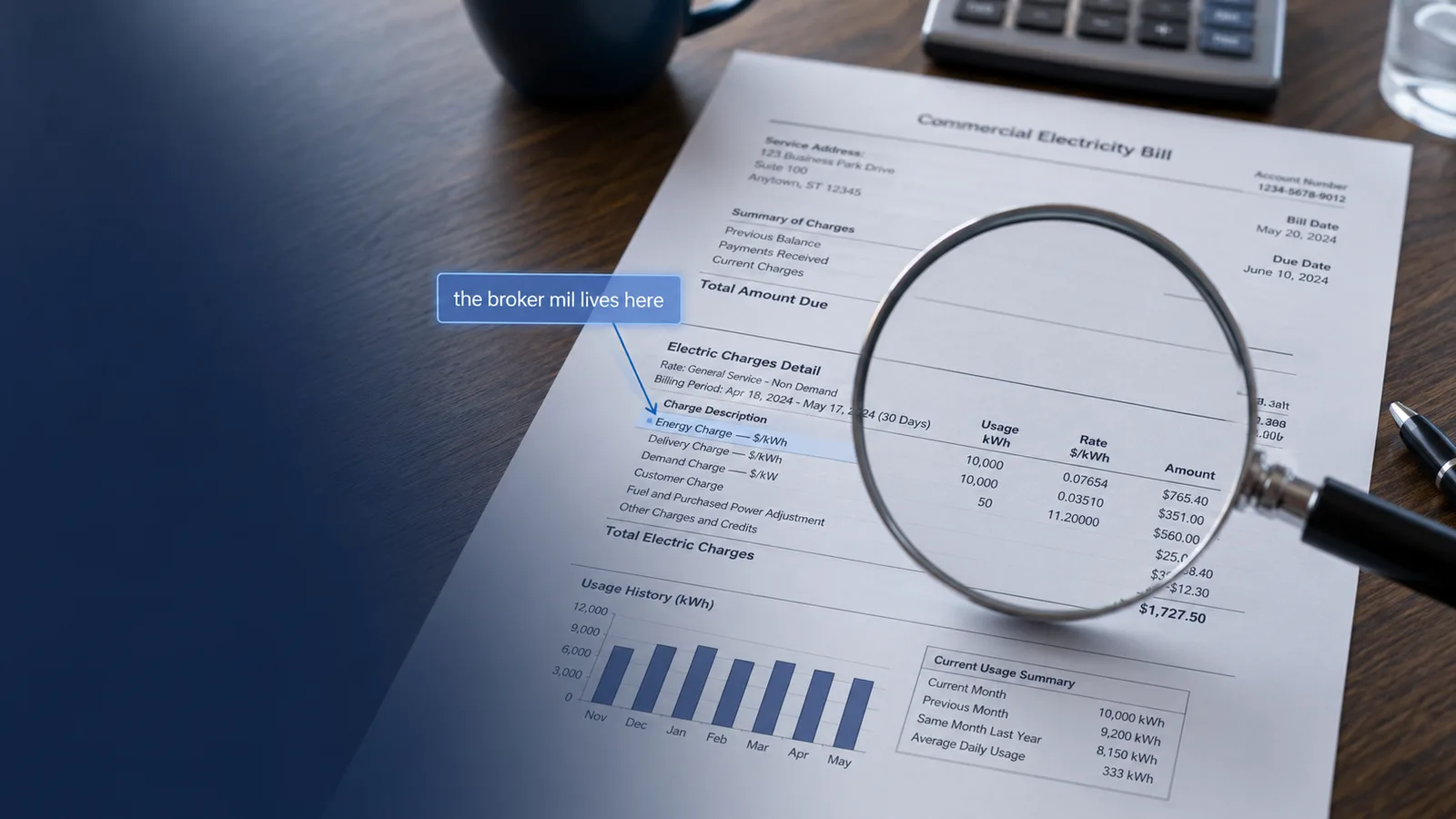
A professional bill audit reviews your historical bills, validates meter readings, confirms your rate class, and identifies any overcharges or credits owed. Our guide to reading your commercial electricity bill walks through every line item. For restaurants that have never had an audit, it is not uncommon to find thousands of dollars in recoverable overcharges.
Negotiate Your Contract — Do Not Accept the Default
This is where the biggest savings are for most restaurants, and it is also where the biggest mistakes happen. Restaurant operators are busy people. Between managing staff, suppliers, health inspections, and the day-to-day demands of running a food service operation, electricity contracts fall to the bottom of the priority list. The contract expires, the auto-renewal kicks in at a higher rate, and months go by before anyone notices.
The fix is simple: start shopping for a new contract 90 to 120 days before your current agreement ends. This gives you time to solicit competitive bids from multiple suppliers and negotiate terms that fit your restaurant's usage pattern.
When you shop through an energy broker, the process is even simpler. The broker collects your usage data, solicits bids from 25+ suppliers, and presents your options side by side. You choose the best one. The broker handles the contract execution and monitors your account going forward — tracking your next renewal date, auditing your bills, and making sure you never slip onto a default rate again.
And it costs you nothing. The broker is compensated by the supplier, not by your restaurant.
Stop Overpaying for Electricity
Running a restaurant in Texas is challenging enough without overpaying for one of your largest operating expenses. The strategies in this guide — managing demand peaks, choosing the right rate structure, scheduling operations strategically, auditing your bills, and actively negotiating your contract — can reduce your electricity costs by 15-25% or more.
The most impactful step is often the simplest: stop accepting the default. Whether that means staggering your equipment startup tomorrow morning or shopping your electricity contract for the first time in years, every action you take puts money back into your business.
Running a Restaurant Is Hard Enough
Schedule a free bill audit with Elite Energy Consultants. We will review your current contract, check for billing errors, and show you what 25+ suppliers would charge for your restaurant's usage.
Schedule a Free Bill Audit