The fastest way to cut a Texas commercial electricity bill is not switching REPs, signing a longer term, or installing solar. It's understanding which line items on your bill are actually moving the total — and most of the time, the answer surprises operators who assumed the kWh rate was the lever. This section is built around a simple premise: every dollar you save on operations is worth roughly two dollars saved on procurement, because operational savings compound across every contract you sign for the rest of the building's life.
We've audited bills for thousands of Texas commercial accounts over the years — restaurants, manufacturers, multi-tenant buildings, healthcare campuses, warehouses, retail. The pattern repeats. The biggest savings almost never come from finding a cheaper REP. They come from cutting demand peaks, fixing rate-class assignments, capturing the sales-tax exemption, and auditing for billing errors that nobody else caught. None of that requires capital. All of it requires knowing where to look, and that's what this section is for.
Demand management: the single biggest lever, and the one most operators ignore
For any Texas commercial account that pays a demand charge — meaning anything bigger than a small office or a residential-class tariff — the demand line item is usually 30 to 70% of the all-in bill. That number isn't an exaggeration. We have seen restaurants in CenterPoint territory where the kWh charge was $1,400 a month and the demand charge was $1,800. We've seen industrial accounts where demand exceeded energy by a factor of two. And in nearly every case, the customer was negotiating their next contract on the kWh rate while ignoring the demand component, which would have moved twice the dollars.
The mechanics are worth understanding precisely. Your demand charge is calculated on your single highest 15-minute average kW usage during the billing cycle — not your peak instant, not your average, not your daily max. ERCOT meters report in 15-minute intervals; the highest of those intervals in the month is your billable demand. For a Houston commercial account, the all-in demand rate (TDU plus any REP-side generation demand) typically runs $9 to $14 per kW. So a chiller that runs at 80 kW most of the time but cycles to 220 kW for a 15-minute startup window once a month is costing you $2,800+ per year in demand charges that didn't have to exist.
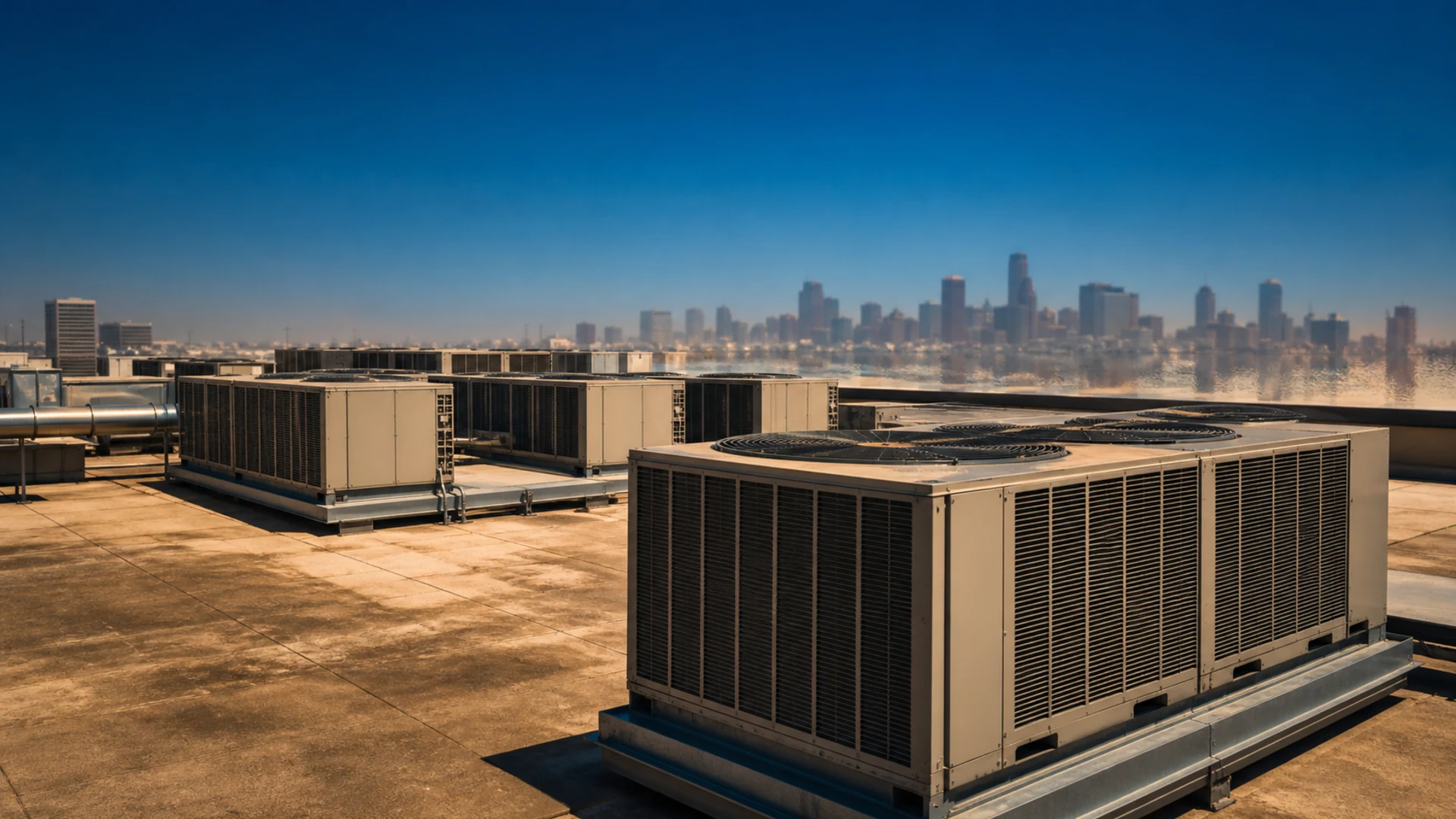
The interventions are mostly operational, not capital. Stagger startup sequences so big loads don't coincide. Pre-cool buildings before peak hours so AC compressors run at lower setpoints during 2-7 PM summer afternoons. Use timers and BMS logic to prevent HVAC, refrigeration, and process loads from kicking on simultaneously. For larger facilities, a basic load-shedding program — automated curtailment of non-critical loads when measured kW approaches a threshold — pays back in months, not years. We cover the full mechanics, the calculation methods (15-minute interval, demand ratchets, 4CP charges for very large accounts), and the operational tactics that actually move peaks in what is a demand charge.
Rate-class auditing: the savings hiding in plain sight
Every commercial account in Texas is assigned to a rate class by the TDU based on transformer size, peak demand, and historical load profile. The rate class determines which TDU tariff applies — and Texas TDU tariffs vary substantially in their kWh-vs-demand-charge mix. A rate class with low energy charges and high demand charges is great for high-load-factor industrial accounts and brutal for spiky retail; a rate class with high energy and low demand is the opposite. The TDU's initial assignment is usually correct on day one, but operations change — a tenant moves out, a production line shuts down, a building gets a major HVAC retrofit — and the rate class often doesn't get updated.
We have moved Texas commercial accounts down a rate class and saved 8 to 12% on the all-in bill with no operational change other than the paperwork. The audit costs nothing — most TDUs will run the rate-class analysis on request, and a competent broker or energy consultant can pull historical interval data and run the comparison. If you've been on the same rate class for more than five years and your building's operations have changed, you should be auditing.
The bill audit: errors are more common than people expect
Texas commercial bills are long, the line items are inconsistent across REPs, and the pass-through calculations involve at least four different rate schedules updated on different cadences. Errors happen. We see them on roughly 8 to 12% of the bills we audit — billing the wrong rate class, applying the prior contract's rate after a renewal took effect, missing the sales tax exemption, double-counting a TCRF adjustment, computing demand on a non-billable interval. The errors usually average a few hundred dollars per occurrence, but on multi-site accounts they aggregate to real money.
Most REPs and TDUs will refund billing errors going back 12 to 24 months once they're identified — Texas Public Utility Commission rules require it. The hard part is finding them, which means knowing what each line item should look like and being able to reconcile your contract terms against the actual charges month over month. The full breakdown of how to read every line item, what to compare against, and the most common errors we catch is in how to read your commercial electricity bill in Texas.
The Texas sales-tax exemption: free money most operators don't claim
Under Texas Tax Code §151.317 and §151.318, electricity used directly in manufacturing, processing, or fabricating is exempt from state sales tax (currently 6.25% in most jurisdictions, with local additions taking it to 8.25%). The exemption also applies to electricity for certain agricultural uses and to common-area electricity in residential apartment complexes. For a manufacturing facility with a $250,000 annual electric spend, the exemption is worth $20,000+ per year — and most accounts that qualify have never filed for it because nobody told them to.
The filing requires a "predominant use study" — a calculation showing that more than 50% of the electricity at the meter is used for an exempt purpose. For dedicated production facilities the math is straightforward; for mixed-use buildings (office space combined with shop floor, for example) it requires sub-metering or a defensible load allocation. Either way, the savings are immediate, ongoing, and retroactively recoverable for up to four years under Texas tax law. If your facility has any production or process load and you're paying full sales tax on the bill, this is almost certainly money on the table.
Industry-specific tactics that move the needle
Energy savings tactics are not generic — they map to load profiles. The interventions that work for a restaurant are different from the interventions that work for a warehouse, which are different from the interventions that work for a multi-tenant office. A few of the patterns we see consistently:
Restaurants and food service. Demand charges drive everything. Refrigeration compressors, HVAC, kitchen exhaust, and pre-cook ovens stack their startup peaks if they all turn on at the same time in the morning. Staggering startup sequences by 15 to 30 minutes — easy with basic time-clock controls — typically cuts peak demand by 15 to 25%, with no impact on operations. We cover this in detail in how restaurants in Texas can cut electricity costs, including the bill structures specific to restaurant rate classes and the equipment-side levers that pay back fastest.
Industrial and manufacturing. Load factor is the dominant metric. Most industrial accounts have load factors above 60%, which means they're well-shaped for index or hybrid contract structures rather than fixed. The rate-structure decision often saves more money than the operational interventions. Beyond that, capacity charges and 4CP exposure (the four highest summer peak hours that determine annual transmission cost allocations) are the place to focus. A facility that can shed 20% of its load during the four predicted 4CP hours each summer can cut its capacity charges by tens of thousands annually.
Multi-tenant retail and office. Common-area metering, master-meter vs sub-meter decisions, and tenant cost allocation drive most of the savings opportunity. Buildings on master meters where tenants are billed back on square footage typically waste 20 to 30% of the energy spend because nobody internalizes the cost; sub-metering reverses that.
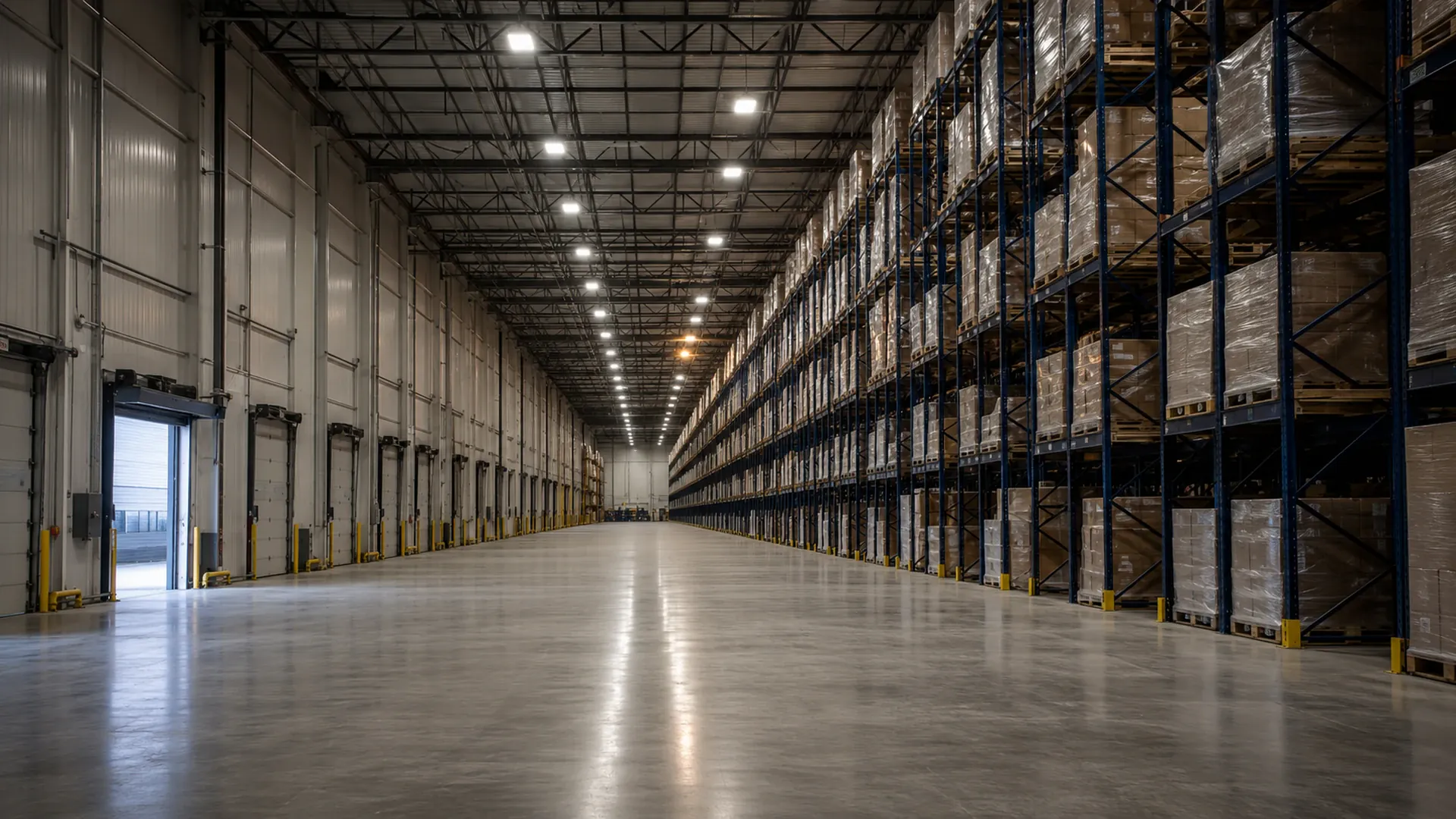
Warehouses and storage. Lighting and HVAC dominate. LED retrofits with daylight harvesting controls have 18-to-30-month paybacks in Texas climates, even before utility rebate incentives. For climate-controlled storage, demand-shedding during summer peaks is the single biggest operational lever.
The article how to lower commercial electricity bills in Texas walks through each of these by industry with real numbers and the specific tactics that pay back fastest.
What this section is not
This section is not about solar, batteries, or capital-intensive efficiency upgrades. Those projects can be excellent investments — payback math in Texas has gotten meaningfully better over the last five years — but they require capex, vendor selection, and ROI modeling that's outside the scope of an energy-procurement-focused site. What we cover here is the savings you can capture without writing a check: operational changes, contract structure decisions, audit recoveries, and tax exemptions. That's where most operators have the most untapped value, and it's where the dollars come fastest.
Start with the demand-charge article if your account pays one — that's almost always the biggest lever. Then read the bill audit walkthrough so you can spot the errors and exemptions other people are missing. The two articles together typically uncover 5 to 12% in savings on a normal commercial account, before you've even started thinking about your next contract renewal.