 By Apollo Kokkinopoulos, CEO
 Utility processes and market rules verified August 2026. TDU construction procedures and ERCOT market documents change; confirm the current requirements with your serving utility before you commit to an opening date.
Setting up commercial electricity service at a new Texas business location is not one universal "pick a plan and turn on the meter" process. Whether you are opening a first site, relocating, or adding a location, the right sequence depends on the condition of the premise.
Want the short version to work from? Use the new-location commercial electricity checklist, which puts every step below in order from lease to first bill. Setting up service at a home or apartment instead? This guide is for business locations — see residential electricity in Texas.
Start by determining whether the exact address has retail choice. At a retail-choice premise, there are three physical paths:
- An existing meter can serve the business without electrical changes. Choose a Retail Electric Provider and have it submit a commercial move-in for the correct ESI ID.
- A meter exists, but your buildout or equipment changes the electrical service. Run the REP account-opening work and the local utility's service-modification process as coordinated tracks.
- There is no meter, no ESI ID, or true utility construction is required. Start with the local wires utility's construction process. Once the utility creates an enrollable ESI ID, coordinate the REP move-in with the remaining construction, permit, release, and meter-readiness work. The REP order and the local approval track may run in parallel or in the order the utility and AHJ require — but every applicable energization condition must be complete before the meter is set or energized.
Opening delays usually begin when those paths get confused. A provider cannot design a transformer. A utility cannot sell you a competitive retail supply contract. And a signed REP agreement cannot energize a site that has not satisfied its construction, release, and meter-readiness conditions.
If your address is served by a municipally owned utility or an electric cooperative that has not adopted customer choice, do not use the competitive REP/ERCOT enrollment path at all. The local utility supplies your retail electricity and handles or coordinates the delivery-service and construction process under its own tariff. Contact that utility's business-service or new-construction team for account setup, rates, credit and deposit requirements, metering, engineering, inspections, and scheduling. Texas Utilities Code §39.102 excludes customers of non-choice municipal utilities and cooperatives from the general retail-choice requirement, and Chapter 40 and Chapter 41 govern their decisions to offer choice.
This guide gives owners, facilities teams, contractors, and multi-location operators a Texas-specific process for getting the right meter energized under the right business account — without a statewide promise that ignores your site.
Start With the Address, Not the Business Electricity Provider
Before you compare a single commercial electricity offer, answer four questions about the exact space:
- Is the address in a retail-choice service territory?
- Is the suite directly metered, master-metered, or submetered?
- Does a valid ESI ID and usable meter already exist?
- Will your equipment require a service or capacity change?
Those four answers determine who you call first.
Is the Address in a Retail-Choice Territory?
Many Texas businesses served by investor-owned wires utilities in ERCOT can choose a REP. Many municipal-utility and electric-cooperative territories cannot. See which Texas cities have retail choice, and why for the utility-by-utility breakdown. At a non-choice address, the local municipal utility or cooperative is both your retail electricity contact and your delivery-service contact — a competitive REP move-in is not the account-opening mechanism at all. Lubbock is the notable municipal exception: ERCOT says the LP&L territory completed its transition to competitive REPs in April 2024. See ERCOT's LP&L completion notice.
Do not decide from the city name or the ZIP code. Service boundaries cross city and ZIP lines. Confirm the exact address through the landlord's utility records, an existing bill, the local wires utility, or a REP that can validate the service point.
The PUCT's Provider of Last Resort service-area page is useful for identifying competitive areas and customer classes, but you still need address-level verification of the premise and ESI ID. If you want the background on why any of this choice exists, read how deregulated electricity works in Texas.
If the Address Does Not Have Retail Choice
Start with the local municipal utility or electric cooperative. Ask for its current commercial-service application, rate or tariff options, credit and deposit policy, meter or service-upgrade requirements, builder and engineering contacts, governing-authority release rules, fees, and scheduling process.
The three physical conditions in this guide — usable existing service, service modification, and new construction — still frame the project well. Just replace the REP, the ERCOT transaction, and the competitive-market ESI workflow with the local utility's instructions. And do not assume the PUCT rules cited here for competitive REPs create identical rights or deadlines in a non-choice territory. They do not.
Is the Suite Directly Metered?
A directly utility-metered suite in a choice area is served through an ESI ID, which may represent one meter or an eligible aggregated set of metered delivery points. As tenant or owner you can generally establish a REP account for the applicable ESI ID — but verify the actual meter-to-ESI mapping before you enroll.
If electricity is master-metered by the building and allocated or submetered by the landlord, your suite may have no separate ESI ID to enroll at all. In that case the immediate electricity question is governed by your lease, the building metering arrangement, and the applicable submetering rules — not by choosing a REP for the suite. The same dynamic plays out in master-metered multifamily properties.
At a retail-choice property, one street address can carry multiple separately metered delivery points and multiple ESI IDs. Exterior signs, common areas, irrigation, fire pumps, outbuildings, and individual tenant spaces may each be separate. Do not assume a universal one-meter-to-one-ESI-ID mapping: Oncor's business guidance describes separate ESI IDs as the usual arrangement at a multi-meter address, while ERCOT Nodal Protocol §15.4.1.2 allows a TDSP to aggregate multiple metered service-delivery points into one ESI ID when the tariff and technical conditions are met. Verify the actual mapping with your serving utility and REP. See the current ERCOT Nodal Protocols.
The Territory Gate and the Three-Path Decision
| What you find at the site | First operational path | Who initiates retail service? | Main risk |
|---|---|---|---|
| Municipal-utility or cooperative address without retail choice | Local-utility business-service or construction process | The local utility opens the retail account and handles or coordinates delivery service under its own procedures | Shopping for a REP, or assuming ERCOT/PUCT competitive-market deadlines apply |
| Retail-choice address; existing meter, correct suite, adequate service, no utility-side change | Existing-service move-in | Your chosen REP sends the move-in to the wires utility | Wrong ESI ID, prior-occupant issue, permit or reconnect condition, or an unaccepted order |
| Retail-choice address; existing meter, but new load or work affecting utility service, voltage, phase, meter location, service entrance, or transformer | Service modification plus move-in | The utility and project team handle infrastructure; the REP handles the customer account and move-in | Assuming "a meter exists" means capacity and approvals are ready |
| Retail-choice address; no meter, no ESI ID, new building, new service, or major upgrade | New-construction project | The wires utility creates and designs the service; once an enrollable ESI ID exists, the REP move-in and remaining approvals follow the utility/AHJ sequence and may overlap | Treating a requested opening date as a construction commitment |
If the physical condition is uncertain, have a qualified electrician and the local wires utility confirm it. A meter can be present but unusable — because the service is damaged, removed from the market system, red-tagged, undersized, or tied to the wrong suite entirely.
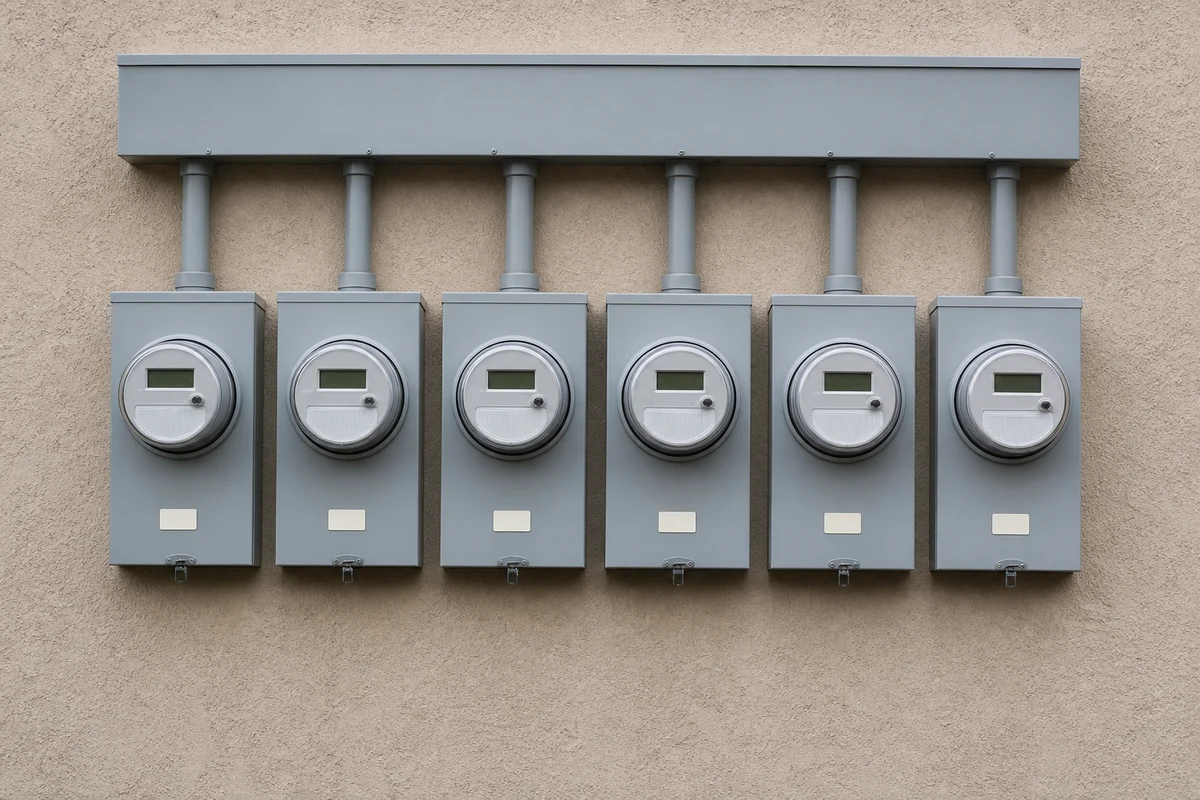
In the Retail-Choice Market, a New Occupant Is a Move-In — Even If the Lights Are On
Texas market terms draw a hard line between a move-in and a switch.
Under PUCT §25.471:
- A move-in establishes the customer of record at a new premise, or changes the customer of record at an existing premise.
- A switch changes REPs without changing the customer of record or the premise.
When a tenant or new legal entity takes responsibility for an energized storefront, office, restaurant, or warehouse, that is generally a move-in. Do not leave the location indefinitely under the landlord's or prior occupant's account, and do not order a provider "switch" using somebody else's customer identity.
The distinction also changes your cancellation rights. PUCT §25.474(j) expressly excludes move-ins from the three-federal-business-day rescission right that covers switch transactions. A REP could contractually offer another cancellation right, but the default Texas switch-rescission rule does not supply one for a move-in. Verify the entity, ESI ID, price, term, and requested start date before you authorize it.
If your business is staying at the same premise and only changing REPs, use the commercial provider-switching guide instead.
Before You Sign the Lease: Electricity Due Diligence
Power availability belongs in site selection and lease negotiation — not on the pre-opening punch list.
Verify Every Meter and Service Identifier
Ask the landlord for a current meter schedule and any recent bills or service records it is authorized to share. Walk the site with the property manager and your electrician. Reconcile:
- street address, suite, floor, and unit;
- physical meter serial number and durable label;
- ESI ID for a retail-choice delivery point, or the local utility's service identifier in a non-choice territory;
- directly metered, submetered, or common-area status;
- present customer of record, if the landlord can lawfully confirm it;
- energized, de-energized, removed, damaged, or unknown status;
- local wires utility;
- voltage, phase, amperage, and service type; and
- which equipment and areas the meter actually serves.
In the competitive retail market, an ESI ID is the market identifier for a service-delivery point. It is not your REP's account number, and it should not be casually swapped with the meter serial number. Do not rely on one universal ESI-ID length either — TDU formats differ. The formal definition is in PUCT §25.5, and CenterPoint's ESI ID request guidance likewise distinguishes the ESI ID from a customer account number. A non-choice municipal utility or cooperative may use an entirely different premise, service, or account identifier — use the one its business-service team requires.
Confirm the Electrical Capacity for Your Actual Use
"Electricity is on" does not mean the space can support your operation.
Have your electrician or engineer compare the existing service against your planned equipment schedule, including:
- HVAC and electric heat;
- commercial cooking and water heating;
- refrigeration and cold storage;
- motors, compressors, pumps, and process equipment;
- welding or high-inrush loads;
- data-room or data-center equipment;
- EV charging;
- signage and exterior loads;
- elevators or lifts;
- added shifts or extended hours; and
- future expansion the lease already contemplates.
Then determine whether the project changes connected or calculated load, main-service amperage, voltage, phase, meter bank, service entrance, utility conductors, meter location, transformer capacity, or the number of meters. Any one of those can move your job from a normal move-in into a utility service review. Restaurants and cold-storage tenants hit this line more often than most.
Allocate Responsibility in the Lease
There is no universal Texas rule making the landlord or the tenant pay every service-upgrade cost. Your lease, the equipment ownership, the utility tariff, the construction agreement, and the negotiated work letter all matter.
Clarify who is responsible for:
- base-building switchgear and electrical rooms;
- meter bases, sockets, CT cabinets, and service entrances;
- transformer pads, conduit, trenching, vaults, and other civil work;
- utility contribution-in-aid-of-construction or extension charges;
- easements and access rights;
- temporary construction power;
- permanent meter applications;
- electrical, building, and occupancy permits;
- common-area and vacant-suite electricity;
- repair of damaged or noncompliant equipment; and
- costs caused by a tenant-specific load increase.
Make utility capacity, landlord work, and government approvals express milestones — not informal assumptions.
Ask About Vacant-Space Continuity
At retail-choice properties, some landlords use a Continuous Service Agreement so eligible meters return to a landlord account when a tenant moves out. ERCOT's current Retail Market Guide includes CSA forms and landlord affidavits in its appendices. See the current ERCOT Retail Market Guide hub.
A CSA can keep a vacant suite energized, but it does not establish the incoming tenant's account. You still need a valid move-in for the correct ESI ID.
Path A: An Existing Meter Can Serve the Business
This path avoids a utility construction project. It still requires exact account data.
1. Validate the Premise
Confirm the meter belongs to the correct suite, is safe and present, carries the intended ESI ID, and does not require a load or service modification. If the power is off, ask whether a permit, inspection, or field visit is required before re-energization.
2. Choose the REP and Contract
Compare qualified commercial offers using your expected load, contract start, term, included and passed-through costs, deposit, demand treatment, usage tolerance, and termination provisions. If you have no usage history at the location, see Choosing a Contract When the Location Has No Useful History below; for a warehouse or 3PL site, see opening a new warehouse in Texas.
3. Authorize a Move-In
Give your chosen REP the exact legal customer name, service address, ESI ID, requested date, authorized signer, and any credit or occupancy documents it asks for. The REP then sends the move-in transaction to the market and the local wires utility.
This REP-led existing-service sequence appears in the current guidance for Oncor, AEP Texas, and TNMP.
4. Get Status — Not Just a Confirmation Number
Ask whether the order is:
- accepted;
- scheduled;
- permit-pending;
- held for identity or credit review;
- blocked by a switch hold;
- rejected for an address, ESI ID, or data mismatch; or
- waiting on construction or field work.
PUCT §25.474 requires your REP to give you the approximate service-start date and any known delays. A sales confirmation is not a completed move-in.
5. Coordinate the Prior Move-Out
The outgoing tenant or landlord controls its own account. Do not impersonate that customer or try to cancel its contract. Give the property manager and both parties a written turnover date, then confirm your move-in is accepted for the correct premise.
If the existing customer moves out before your order is ready and no landlord continuity arrangement applies, the space can de-energize. If both parties submit conflicting or incorrect orders, the start can fail too. Coordination matters even though the accounts stay legally separate.
Path B: A Meter Exists, But the Business Changes the Service
A tenant improvement can require utility involvement even when a meter is already on the wall.
Contact the local wires utility's builder or construction group early if your project changes:
- service amperage, voltage, or phase;
- transformer demand or available fault current;
- meter bank, meter type, CT metering, or meter location;
- service entrance or utility-owned facilities;
- number of ESI IDs;
- overhead versus underground service;
- a major connected load; or
- equipment whose start-up characteristics matter to the utility.
TNMP, for example, routes additions and significant load increases into its project process rather than treating them as an ordinary start-service request. See TNMP's current new-lines guidance.
The utility track and the REP track can overlap, but neither replaces the other:
- Your electrician or engineer prepares load calculations, one-lines, service sizing, and code-compliant customer work.
- The wires utility reviews utility capacity, designs or modifies its facilities, creates or updates ESI records, and schedules utility-side work.
- The authority having jurisdiction, or AHJ, issues permits and inspection approvals and records or transmits a utility release where the local process assigns that function to it.
- The REP accepts the retail contract and submits the move-in for the correct ESI ID.
If work has to happen near utility service conductors or the meter, arrange the utility's controlled disconnect and reconnect process. Never let a contractor remove, bypass, or reseal utility equipment without authorization.
Path C: No Meter, No ESI ID, or New Construction
A true new service starts with the wires utility's construction process — not by buying a plan.
The exact order varies, but the work generally moves through these coordinated gates.
1. Establish an Official Service Address
Make sure the utility, city, fire department, postal addressing authority, landlord, and project team all use the same street and suite identifiers. Address discrepancies stop the ESI ID, the permit release, and the REP order from matching each other.
2. Submit the Utility Construction Application and Load Package
The package may include:
- owner, customer, contractor, electrician, and engineer contacts;
- site plan, plat, survey, and service location;
- one-line or riser diagram;
- National Electrical Code load analysis or utility load sheet;
- voltage, phase, amperage, service type, and connected load;
- operating hours and major equipment;
- temporary and permanent need dates;
- overhead or underground preference;
- meter quantity and type;
- proposed transformer or meter location; and
- deed, easement, right-of-way, or access information.
CenterPoint lists load analysis, a one-line, a site plan, a potential deed for easement purposes, and the need date among common commercial project inputs. See its construction checklist and construction process.
3. Complete Design, Agreements, Payment, and Civil Work
Depending on the project, the utility may need a site meeting, engineering design, easements, a service agreement, a contribution payment, transformer-pad work, conduit, trenching, clear access, or other customer construction before it will schedule a crew.
Late load or layout changes trigger redesign and material changes. Freeze the major equipment and meter locations as early as you responsibly can.
4. Obtain the ESI ID
The wires utility creates the ESI ID as part of making the delivery point market-ready. Oncor states that its project process provides the ESI ID when the project is ready for the retail-service steps, and CenterPoint has a dedicated ESI ID request process.
Record the identifier directly from the utility and use it on the REP order, the meter schedule, and your internal opening tracker. Where the AHJ or utility process puts an ESI ID on a permit or release, use the utility-issued identifier. Where it does not, reconcile the exact address, suite, tenant name, and ESI ID before the release gets matched to the project.
5. Complete the Applicable Permit and Inspection Release
The city, county, or other AHJ may require electrical, reconnect, building, temporary-power, or occupancy-related approvals. Where a utility release is required, it must be recorded or transmitted through the local process in the format and identity the utility expects.
6. Select the REP and Submit the Move-In
Once an enrollable ESI ID exists, execute the retail agreement and have the REP submit the move-in according to the utility or project manager's sequencing. This step and the permit/release step may proceed in parallel or in either order under the local process. Both — plus every other meter-readiness condition — must be complete before energization where required. Signing the REP contract does not mean the construction project is complete.
7. Satisfy Every Meter-Set and Energization Prerequisite
Before final meter-set or energization scheduling, confirm the utility has received all applicable items. Earlier construction and field work may be scheduled under the utility's project plan before every final energization condition is complete.
- accepted REP move-in;
- correct ESI ID and customer/permit identity;
- inspection or permit release;
- completed utility and customer construction;
- executed easements and agreements;
- required payment;
- a clear, safe, accessible site;
- permanent address and meter labels; and
- meter base and service equipment ready for inspection or energization.
8. Commission the Service
After energization, your electrician verifies the service and brings large loads online in a controlled sequence. Meter set, energization, and successful equipment commissioning are three distinct milestones — do not let anyone collapse them into one.
ERCOT's beginning-service process excludes premises where construction service is still required. It does not turn an incomplete construction project into an ordinary move-in. See the current ERCOT Nodal Protocols.
Temporary Construction Power Is a Separate Workstream
At a retail-choice project, temporary service may need its own application, equipment, permit, meter, ESI ID, REP enrollment, and removal or swingover order. At a non-choice project, the local utility may use a different identifier and retail-account sequence. Either way: do not assume temporary service automatically becomes the permanent service.
Track your temporary and permanent delivery points as two separate records, each carrying its own service address or project label, meter number, ESI ID, utility application, permit or release, REP and contract, requested date, energized date, swingover or removal owner, and closed-and-final-billed status.
AEP Texas publishes separate builder paths for permanent commercial and temporary service, and TNMP routes temporary-to-permanent swingovers through the REP. See AEP Texas builders and contractors and TNMP new lines and extensions.
Permits, Inspections, Electricity, and the Certificate of Occupancy
There is no safe statewide statement that every Texas business must receive its certificate of occupancy before electricity can be energized — or that permanent electricity must always precede the CO.
A REP contract, a utility meter release, an electrical inspection, a temporary-power approval, and a certificate of occupancy are five separate approvals. Their order depends on:
- the city, county, or other AHJ;
- whether the project is ground-up, a tenant improvement, or an existing unchanged space;
- whether temporary or permanent service is requested;
- whether electricity is needed to perform final equipment or life-safety tests;
- whether the permit is tied to the premise or the tenant name; and
- the local utility's release process.
Official city materials show how much this varies. Dallas describes applicable inspections and an electric release within its CO process, while Houston's commercial guidance contemplates temporary utilities during permitted work and final inspections before a CO request. See the City of Dallas CO brochure, Houston Commercial Permitting 101, and Houston's existing-building occupancy guidance.
Ask your AHJ these questions in writing:
- Which permits and inspections apply to this scope?
- Is the electric release premise-based or tenant-based?
- Which legal name and suite must appear on the permit?
- Who transmits the approved release to the utility?
- Can temporary or permanent power be energized before the CO?
- Is power required for final inspections?
- Is a CO, temporary CO, or certificate of compliance required?
- Does a long-inactive or removed meter require a reconnect inspection?
- How must the address match the utility and REP records?
Then ask the utility to confirm it has actually received and matched the release. "Inspection passed" and "the release is in the utility system" are not always the same milestone.
Who to Call — and What Each Party Controls
| Party | What it controls | What it does not control |
|---|---|---|
| Business / tenant | REP selection, account data, operating forecast, deposit and credit, tenant work assigned by lease | Utility design or government approval |
| Owner / landlord | Property consent, base-building assets, common-area meters, easements and work assigned by lease | The tenant's retail contract, unless authorized |
| Electrician / engineer | Load calculation, one-line, customer-side service design, code compliance, commissioning | REP pricing or utility crew schedule |
| Wires utility / TDU / TDSP | ESI ID, utility design, utility-owned poles, wires and transformer, meter installation and removal, utility construction, field service orders, energization | Competitive retail price and contract |
| REP | Retail price and terms, customer account, billing, move-in / switch / move-out transactions | Construction design, permit issuance, or outage restoration crews |
| Non-choice municipal utility / cooperative | Retail account and rate or tariff, delivery facilities, metering, local service and construction process | A competitive REP selection the territory has not adopted |
| AHJ | Permits, inspections, occupancy approvals, and recording or transmitting a utility release where the local process assigns it | REP contract acceptance or utility material availability |
| ERCOT | Market-registration and transaction framework | Direct customer construction or connection service |
At a retail-choice premise with ordinary existing service, call the REP to start the move-in. For a new meter, service upgrade, transformer, or utility construction, start the project with the local wires utility and coordinate REP enrollment once the ESI ID and schedule are ready. For the request paths, what each TDU publishes on timing, and the meter charges that follow, see getting a new or smart commercial electric meter in Texas. At a non-choice municipal-utility or cooperative premise, use that local utility for both the retail account and its service or construction workflow. If the role split is still fuzzy, REP vs. utility lays it out in detail.
Documents and Data to Assemble
Requirements vary by REP, utility, and project. Treat this as a preparation list, not a claim that every item is mandatory.
Business Identity and Account File
- exact legal entity and DBA;
- federal tax ID/EIN or another identifier the REP accepts;
- authorized signer and title;
- billing, facilities, and accounts-payable contacts;
- exact service and billing addresses;
- desired service date;
- every ESI ID and meter number, or the non-choice utility's corresponding identifiers;
- credit application, deposit, guaranty, or security documents;
- signed lease, closing statement, or occupancy evidence if requested;
- letter of authorization for a broker, consultant, landlord, or agent;
- sales-tax exemption certificate if applicable; and
- payment method and purchase-order requirements.
For a telephonic nonresidential enrollment, PUCT §25.474 allows a federal tax ID as a verification method. The rule does not establish one universal REP application package. A lease can be useful evidence — it is not a universal PUCT prerequisite for every business enrollment.
Those REP authorization rules describe the competitive retail market. At a non-choice municipal utility or cooperative, get that utility's own business-account application and verification requirements.
Load and Procurement File
- available prior monthly usage;
- interval data where lawfully authorized and available;
- operating days and hours;
- occupancy or production ramp by month;
- equipment schedule and expected start dates;
- estimated kWh and peak kW;
- voltage, phase, amperage, and service type;
- major HVAC, kitchen, refrigeration, motor, process, or charging loads;
- expansion, closure, solar, storage, or efficiency plans; and
- temporary-versus-permanent service needs.
Engineering and Construction File
- project and contractor contacts;
- site plan, plat, survey, and service location;
- one-line and riser diagrams;
- NEC load analysis or utility load sheet;
- proposed and existing electrical characteristics;
- overhead or underground request;
- transformer and meter locations;
- easements, deed, and access information;
- construction need date and business opening date;
- permit numbers and inspection releases; and
- utility agreements, payment receipts, and site-readiness confirmation.
Can You Use the Prior Location's Usage History?
Historical premise data improves both procurement and capacity planning — but it is not public just because you are considering the lease.
PUCT §25.472 provides a process for a REP to request prior monthly usage with appropriate customer or applicant authorization. Smart Meter Texas gives authorized users detailed advanced-meter data after registration — it is not a public lookup for a prospective tenant. See also its official interface guide. At a non-choice municipal utility or cooperative, ask the local utility and the current customer what data can be released and what authorization it requires.
Possible sources include:
- the landlord or seller, if authorized to share its own bills;
- the outgoing business, with appropriate consent;
- your chosen REP, through the authorized market process;
- a registered broker or consultant with a valid letter of authorization; and
- an engineering forecast when lawful history is unavailable or no longer representative.
And do not assume the former occupant's profile predicts your operation. A restaurant replacing a boutique, a cold-storage tenant replacing dry warehouse use, or a second shift added to a plant all make the history misleading.
Choosing a Contract When the Location Has No Useful History
You do not need a year of bills to get commercial electricity offers. When a location has no usable history, REPs estimate its usage themselves from the square footage and the type of business, drawing on their experience with similar operations. That makes an accurate description of the space and what runs in it the core of a new-location quote.
Two things sharpen that estimate. The strongest is a recent bill from another location of the same business — even one outside Texas — because it shows how your operation actually uses power, including its peak demand. The prior occupant's usage helps only when the same kind of business continues at the address; when a different kind of business moves in, it describes someone else's load. Your operating hours and major equipment fill in the rest.
At a non-choice address there may be no competitive supply contract to choose at all; the same description helps you select among the local utility's applicable commercial rates and plan the correct service class.
When a Detailed Load Forecast Matters
A detailed engineering forecast is not what gets you a supply quote — it is what the wires utility needs when your site requires a service upgrade, a new meter, or construction, so it can size the transformer and service. For that capacity and construction review, model at least:
- construction and commissioning load;
- soft opening;
- first full month;
- expected stabilized operation;
- seasonal HVAC or refrigeration exposure;
- occupancy, sales, or production ramp;
- known equipment additions; and
- downside and upside cases.
The same ramp is worth keeping in mind at contract time: a site whose hours, equipment, or occupancy have not stabilized needs usage terms with room to move.
Compare More Than the Energy Price
Review:
- fixed, indexed, or hybrid structure;
- exact term and service-start provisions;
- which supply, ERCOT, congestion, ancillary, capacity, and transmission items are included or passed through;
- TDU delivery-charge treatment;
- demand-related pricing and your expected rate class;
- minimum-use, usage-band, swing, and material-change provisions;
- early termination, relocation, assignment, and site-closure terms;
- meter-addition and deletion rights;
- deposit, collateral, guaranty, and payment terms;
- taxes and exemption handling;
- renewable content or REC claims; and
- renewal notice and post-term product.
Your uncertainty is itself a contract risk. A narrow volume tolerance can make an apparently attractive price a poor fit for a site whose hours, equipment, or occupancy have not stabilized yet. If you are weighing structures, fixed vs. variable rate electricity covers the trade-off, and the broader framework lives on commercial electricity in deregulated Texas.
Commercial Electricity Deposits and Credit
Budget for credit review without assuming a deposit will be required — or that you can always avoid one.
The PUCT rules below apply to REP enrollment in the competitive market. A non-choice municipal utility or cooperative follows its own tariff, policy, and governing rules; ask it directly for the commercial deposit calculation, security alternatives, interest treatment, and refund conditions.
Under the default protections in PUCT §25.478 — subject to any permissible written variation under PUCT §25.471 for a nonresidential customer at or above the 50 kW small-commercial boundary, or a qualifying aggregation above it:
- a REP may use nondiscriminatory credit criteria for a nonresidential applicant;
- if satisfactory credit is not demonstrated, the REP may require an initial or additional deposit;
- governmental entities are exempt from the deposit requirement;
- a deposit held more than 30 days earns interest at the PUCT-set rate;
- the rule provides for refund after 24 consecutive nonresidential billings without a late payment; and
- when service is not established, or the REP stops being the REP of record, deposit and interest are refunded or transferred under the rule after permitted deductions.
The explicit deposit cap in subsection (e) is residential. Do not apply it as a statewide cap for business accounts.
Ask each REP, in writing:
- what credit information it requires;
- whether the deposit is per legal entity, per account, or per ESI ID;
- when the amount is due;
- whether a guaranty, letter of credit, surety, or other security is accepted;
- what triggers an additional deposit;
- how interest is handled;
- when refund eligibility is reviewed; and
- how the deposit is applied at move-out or provider change.
Keep the deposit out of your recurring energy-cost comparisons. It is a cash and credit requirement — the full refundable principal is not a permanent operating expense.
What If the Old Tenant's Debt Creates a Switch Hold?
This switch-hold process belongs to the competitive retail market. A non-choice municipal utility or cooperative may use different account-opening and prior-balance procedures under its own rules.
A legitimate new occupant does not become the former customer merely by leasing the same address. But the REP and market process can require evidence when an account-holder change appears connected to an unpaid balance.
PUCT §25.480 governs recognized switch holds. Under §§7.16.4.3.2 and 7.17.3.3.2 of the current ERCOT Retail Market Guide, removal for a legitimate new occupant requires a completed, signed New Occupant Statement plus at least one qualifying corroborating document. The guide's options include a current signed lease, a utility bill from another premise, a notarized landlord affidavit, qualifying closing documentation, a certificate of occupancy, or comparable documentation that satisfies the current process. Assemble the statement and supporting document through your REP rather than relying on the lease alone, and recheck the current guide before you use it.
Do not claim every prior balance creates a hold, and do not try to evade a valid debt by renaming the same customer. PUCT §25.477 lets a REP address an account-holder change that appears intended to avoid payment.
How Far Ahead Should You Start?
As soon as the address and load are credible. Your planning window comes from dependencies, not from one statewide number.
Existing Meter, No Construction
Service can move relatively quickly after REP acceptance, credit approval, any required permit, and a valid utility order. The schedule can still shift because of meter status, switch holds, field work, weather, workload, or data mismatches.
CenterPoint gives one useful but narrow example: for a meter-ready site with no construction, it describes a typical three-to-five-business-day utility period once any applicable governing-authority permit or release, the REP move-in, and all remaining meter-readiness conditions are in place. That is not a statewide promise, and it is not the total time you need to select a REP or resolve exceptions. See CenterPoint's construction and energization process.
Service Modification or New Construction
Plan in weeks or months, then let the utility's project manager replace that assumption with project-specific milestones. Your critical path can include:
- address creation;
- load study and utility design;
- easements and agreements;
- transformer or other material availability;
- contribution payment;
- trench, conduit, pad, and civil work;
- customer electrical work;
- inspection and release;
- ESI creation;
- REP enrollment;
- crew scheduling;
- weather or storm response; and
- commissioning.
TNMP warns that materials it does not commonly stock can delay a project by as much as 16 weeks, and that ordering starts only after required payments. That is a TNMP-specific risk example, not a statewide construction duration. See TNMP's current project requirements.
Use a Dependency Schedule
Give every milestone an owner, a required predecessor, a target date, an actual date, and written evidence. At minimum, track:
- official address and suite;
- retail-choice status, or non-choice local utility, confirmed;
- utility project accepted;
- load package complete;
- design approved;
- easements and agreements;
- required payment;
- customer civil and electrical work;
- ESI ID issued, if applicable;
- permit or inspection release received by the utility, if applicable;
- REP contract or local-utility retail account accepted;
- move-in or local-utility start order accepted and scheduled;
- meter installed and set;
- service energized; and
- equipment commissioned.
Your opening date should never depend on a verbal "should be fine" attached to an incomplete predecessor.
Multi-Meter and Multi-Location Controls
For each delivery point, keep one row recording the property and suite, the wires utility, the meter serial and ESI ID (or the non-choice utility's identifier), temporary or permanent designation, existing/new/upgrade status, voltage, phase, amperage and planned load, the legal customer of record, the REP and contract (or local-utility account and tariff), requested move-in date, permit and release status, utility construction status, meter-set and energized dates, and an internal owner.
A portfolio can negotiate common commercial terms, but it does not merge the ESI IDs, service orders, permit releases, site-readiness conditions, or opening dates. Confirm each location separately.
Permanent physical labels matter at grouped-meter properties. CenterPoint's ESI guidance calls for durable address identification on grouped installations. A clean meter schedule prevents the most expensive opening error there is: the contract and service order are perfectly correct — for the neighboring suite.
Opening Day and the First Bill
The last two stages are where a correct setup gets confirmed: before opening, check that the REP accepted the move-in, the utility received any required release, and the meter is set and energized; on the first bill, check the entity, ESI ID, dates, price, and rate class against what you signed. The new-location checklist lists both stages item by item.
If you are not sure what you are looking at, how to read a commercial electricity bill walks through each line. Register for authorized interval-data access when it is available, so your operations team can compare the real opening load against the forecast.
Common Mistakes That Delay or Inflate New-Business Electricity Setup
- Shopping for a REP before confirming retail choice and direct metering.
- Treating an energized space as permission to use the prior occupant's account.
- Confusing a move-in with a same-customer provider switch.
- Assuming the ESI ID is the meter serial or the REP account number.
- Enrolling the neighboring suite's meter.
- Signing the lease before checking voltage, phase, and available capacity.
- Treating a major load addition as an ordinary move-in.
- Assuming a REP can install the meter or transformer.
- Assuming the utility sells the competitive supply contract.
- Quoting a universal CO-versus-electricity sequence.
- Treating "inspection passed" as proof the utility received the release.
- Using the wrong tenant or permit name in a permit-pending process.
- Assuming temporary power automatically converts to permanent.
- Applying a residential deposit cap to a commercial applicant.
- Assuming every REP requires a lease — or that no REP will ever request one.
- Treating prior-tenant interval data as public.
- Giving the opening date as the utility "need date" without a dependency plan.
- Failing to close the temporary meter after permanent commissioning.
- Comparing a supply-only quote against an all-in historical bill.
- Forgetting to assign ownership of the next contract renewal.
Frequently Asked Questions
How do I set up electricity for a new business in Texas?
First verify whether the exact address has retail choice, then determine its metering and electrical condition. At a non-choice municipal-utility or cooperative address, open the retail account and any construction project through that local utility. At a retail-choice address with an existing unchanged meter, choose a REP and submit a commercial move-in. For a load change, service upgrade, new meter, or construction project, start with the wires utility. Once an enrollable ESI ID exists, coordinate the REP move-in and the applicable permit and release work in the order — or the parallel tracks — the utility and AHJ require. Every applicable energization condition must still be complete.
Do I contact the REP or the utility first?
At a non-choice municipal-utility or cooperative address, contact that local utility for both retail account setup and any construction work. At a retail-choice address with an existing meter that needs no utility work, contact the REP — it submits the move-in. For new construction, a new meter, transformer work, or a material service change, contact the local wires utility's construction group first and coordinate REP enrollment as the project becomes market-ready.
What is an ESI ID, and where do I find it?
The ESI ID identifies an electric service-delivery point in the competitive Texas retail market. It is not your meter serial number and not your REP account number. Find it on an existing bill, through the local wires utility's premise process, or through an authorized REP lookup. Oncor also offers an address-based ESI ID lookup for its territory. A non-choice municipal utility or cooperative may use a different service or account identifier — ask which one belongs on the application and project documents. For format by utility, the spelling variants and lookup routes, see our ESI ID lookup guide.
What if electricity is already on under the landlord or prior tenant?
Establish your own account rather than relying on somebody else's service staying active. In a retail-choice area, have your REP submit a move-in for the correct ESI ID. In a non-choice territory, submit the local utility's account or start order using the identifier it requires. Coordinate the turnover date either way.
What if the location has no meter?
Open a new-service or construction project with the local utility. It may require load data, plans, easements, agreements, payment, customer work, inspections, and site readiness before it creates or energizes the delivery point. At a retail-choice premise, once the wires utility provides an enrollable ESI ID, coordinate the REP move-in with the remaining project and approval track. The REP order does not always have to wait for the inspection release, but every applicable condition must be satisfied before energization. At a non-choice premise, follow the municipal utility's or cooperative's account and meter-set sequence instead.
What if the meter exists but cannot support my equipment?
Have your electrician or engineer document the proposed load and contact the utility for a service or capacity review. A main-service or service-equipment change affecting utility service — or a voltage, phase, service-entrance, meter, or transformer change — is not an ordinary move-in. An interior distribution-panel change alone does not automatically create a utility construction project, though it may still require local permits or a controlled disconnect.
Do I need a certificate of occupancy or electrical inspection first?
It depends on the AHJ, the utility, the project scope, and whether temporary or permanent service is involved. Ask your local building department and utility for the exact sequence. There is no single statewide rule.
How far ahead should I start?
Begin during site diligence, as soon as you have the exact address and a credible load. An existing permit-clear meter can move on a service-order timeline. A new or upgraded service can require weeks or months of design, easements, construction, materials, inspections, and scheduling.
What documents does a REP need for a business account?
Requirements vary. Common items include the legal entity, tax identifier, authorized signer, exact service address and ESI ID, requested date, expected usage, credit information, and sometimes occupancy evidence or a letter of authorization. A lease is useful in some cases but is not a universal PUCT requirement.
Will a new business have to pay an electricity deposit?
Possibly. Under the default protections, a REP may apply nondiscriminatory nonresidential credit criteria and require a deposit if satisfactory credit is not shown. There is no universal residential-style cap for commercial deposits under §25.478. A nonresidential customer at or above the 50 kW small-commercial boundary — or a qualifying aggregation above it — may agree in writing to different levels of certain protections under §25.471; size alone does not erase the rule. A non-choice municipal utility or cooperative uses its own commercial deposit rules. Ask the serving entity for the written policy and the security alternatives.
Can I use the prior tenant's usage history?
Only through an authorized path. A landlord or prior customer may share data it lawfully controls, or a REP or authorized agent may request available history through the applicable process. Smart Meter Texas is not a public prior-tenant lookup. In a non-choice territory, ask the local utility and current customer about its authorization process. It helps most when the same kind of business continues at the address; when a different kind of business moves in, the history describes someone else's load.
Can I transfer my current business electricity contract to the new location?
Only if the contract and REP allow it and the new premise can be served under the agreed terms. A location-specific small-commercial contract may instead qualify for a relocation exit under §25.475. An agreement for a nonresidential customer at or above the 50 kW small-commercial boundary — or a qualifying aggregation above it — may contain assignment, add/delete, or relocation provisions. In a non-choice territory, ask the local utility whether it transfers a business account or requires a new service application. Confirm the answer in writing before you assume a transfer.
Does a commercial move-in have a three-day rescission period?
Not under the default PUCT switch-rescission rule. Section 25.474 expressly excludes move-ins from its three-federal-business-day right. A contract could offer another cancellation right, but review and approve the terms before you authorize the move-in.
The Bottom Line
The reliable path to business electricity is the one that matches your actual premise.
- Existing, adequate meter: validate the ESI ID, select the REP, and track the move-in to completion.
- Existing service with a material load or equipment change: run utility engineering and REP enrollment as coordinated tracks.
- No meter or new construction: treat address, design, easements, construction, local approvals, ESI creation, REP order, meter set, and commissioning as controlled project gates. Once an enrollable ESI ID exists, the REP order and the permit/release track may overlap or follow whichever sequence the utility and AHJ require.
Those three describe retail-choice premises. At a non-choice municipal-utility or cooperative address, keep the same physical due diligence but replace REP and ERCOT enrollment with the local utility's retail-account and service process.
Above all: do not let your opening date rest on a generic lead-time promise. Give every meter a named owner, every prerequisite written evidence, and every transaction a status beyond "submitted."
Set Up Electricity for My New Business Location
If your address has retail choice, Elite Energy Consultants will help you validate the service points, describe the new load to suppliers, and compare commercial contracts against your opening date. At a non-choice address, your local utility's business-service team is the right first call.
Request a New-Business Electricity Review